
It’s late 2009. Ulrika Jonsson has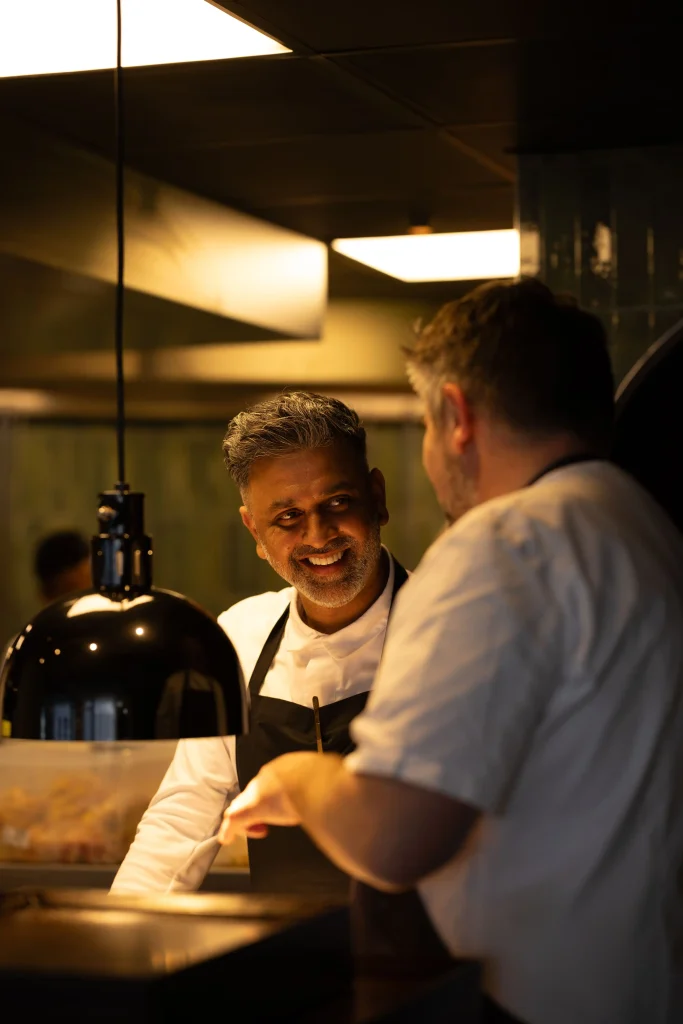 won Celebrity Big Brother, Susan Boyle has sung I Dreamed a Dream and Gino D’Acampo has been crowned King of the Jungle. Meanwhile, The F Word is in its stride. The fifth series sets out in search of ‘Britain’s best local restaurant’ – and Gordon Ramsay is at Lasan in Birmingham, talking across the pass to ‘young gun from the Midlands’ Aktar Islam.
‘What’s the ambition?’ Gordon asks the 22-year-old restaurateur. ‘I’m hoping to get a Michelin star, yeah, that’s the plan,’ smiles Aktar, shyly. Gordon turns to-camera. ‘I love his arrogance,’ he grins. ‘That’s one hell of a cocky chef.’
Today, Aktar is in the development kitchen at Opheem, his two-Michelin-starred restaurant in Birmingham city centre. Conversation easily meanders from his childhood in Solihull – leaving school at 13, cooking in his father’s restaurant – to his upcoming London debut, Oudh 1722. Then there’s a Bristol launch in the pipeline and his Atkar at Home meal delivery kits quietly growing a cult following. Seventeen years on, it reads less as arrogance, more latent ambition.
By now, many a chef would be consolidating what’s already been built – refining the avant-garde dishes that made their name, like Opheem’s pakora reimagined as deep-fried shiso leaf and espuma-gunned pink fir potatoes with mango and tamarind. Yet this summer marks a new chapter. Not just expansion, but a shift. Less alchemy, more anthropology.
In the heart of Borough Market, Oudh 1722 – a three-storey, Victorian-listed building – promises to be a temple to a golden age of Indian gastronomy, rooted in Awadhi cuisine. ‘What I’m doing is the same as what chefs in Europe have always done,’ he says, ‘looking back to classical techniques – but doing it through an Indian lens.’ This is high gastronomy: whole turbot emerging from a gold-patterned casing, smoked shoulder of lamb encased in pastry etched with paisley motifs.
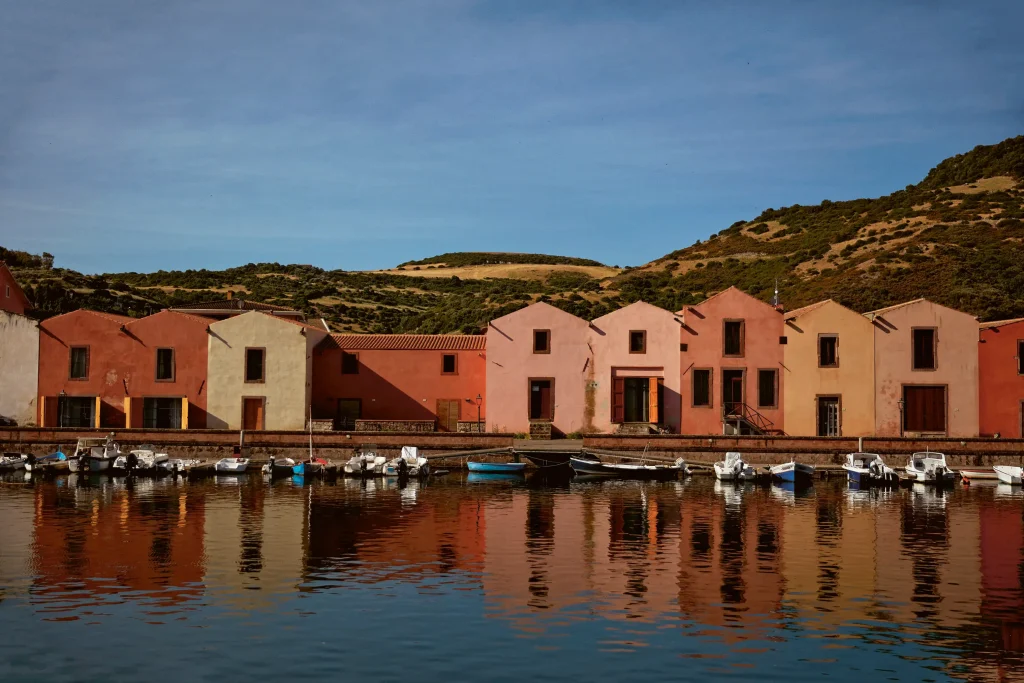
Awadhi cuisine traces its roots to Lucknow  in northern India (one of the few destinations recognised by Unesco as a Creative City of Gastronomy). In the early 18th century, as the Nawabs broke from Mughal rule, a distinct cultural identity emerged. ‘In all fields – poetry, art, gastronomy – there is a very distinct personality,’ Aktar says. The cuisine, shaped by royal courts, is about precision and restraint. Dishes such as Tunday ke kebab are said to include more than 100 spices, yet the skill lies in balance. Ingredients are luxurious – saffron, cardamom, nuts, ghee – supported by a repertoire of brass and copper vessels, each designed to control heat and deepen flavour.
It’s a far cry from the 1990s heyday of Birmingham’s Balti Triangle. But then, a third-generation British Bangladeshi, Aktar grew up between two very different expressions of the same cuisine: the food his mother cooked at home, and the very different style served in his father’s restaurant. ‘There is a gulf,’ he says. At home, flavours were lighter, fresher. In the restaurant, dishes were often adapted, renamed, reshaped to fit expectation. ‘What’s sold under the name of a dish often has very little to do with its origins,’ he says.
For a long time, he fought it. But with distance has come a more generous view. The British curry movement, he insists, is a cuisine in its own right – one with its own flavour, its own logic, its own place. ‘It made people more adventurous and expanded the nation’s palette,’ he acknowledges.
Yet the memory of certain British versions of dishes, like pasanda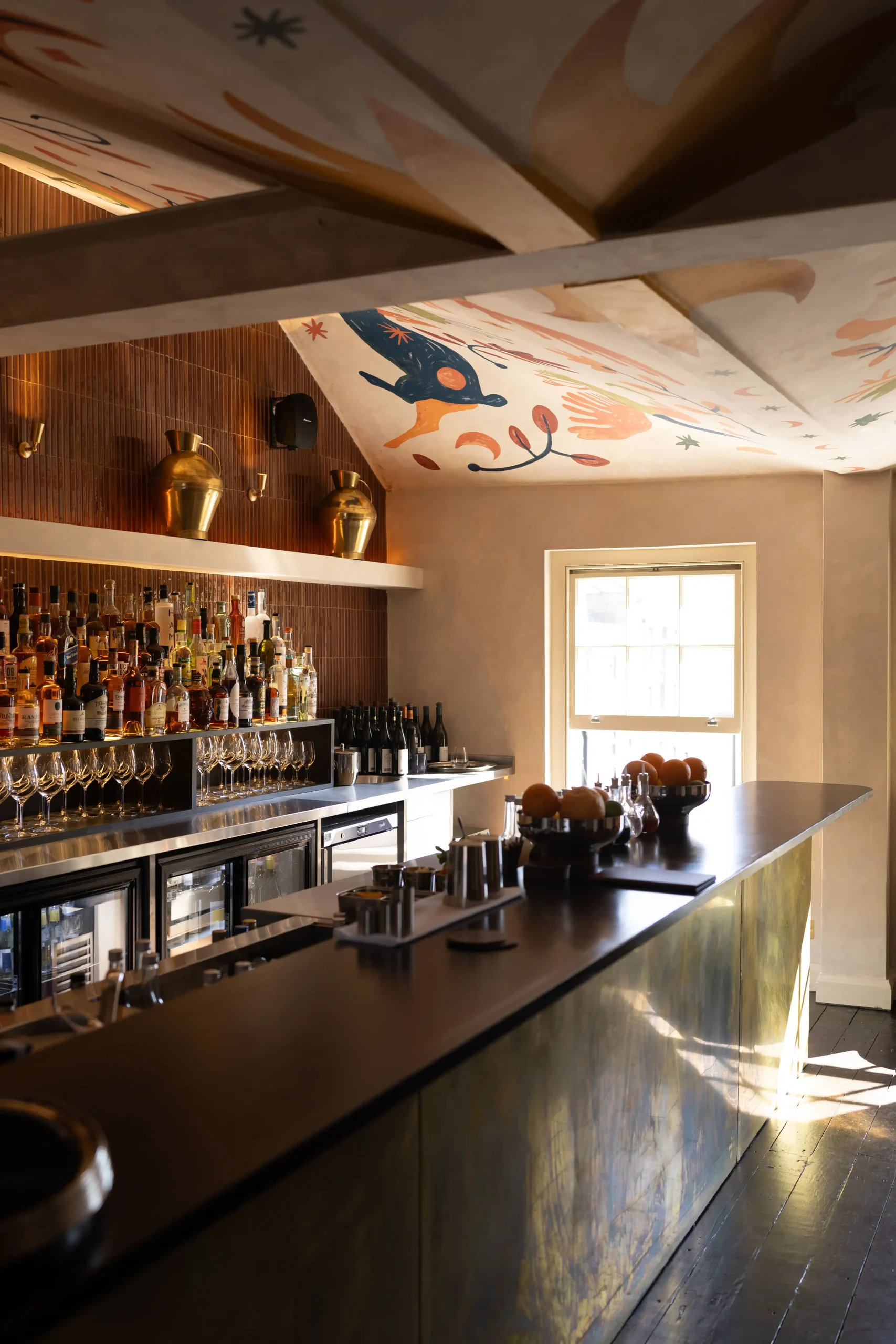 topped with glacé cherries, still rankles. It forms the bedrock of an obsessive need to understand – not just how a dish tastes, but its integrity, its essence. Which, for Aktar, goes beyond Bangladesh and Indian cuisine. He was never going to be one of those chefs looking only to his roots, but one pursuing a global culinary education in real time – reading, travelling, absorbing, following flavour wherever it led. ‘I’ll taste something and I want to learn more and more and more about it,’ he says.
When his brother moved to Canada, for example, Aktar went to visit – but quickly found himself distracted by lobster fisheries. He returned to Birmingham and opened a lobster restaurant. There was an Argentinian restaurant, following a trip to Buenos Aires. A Neapolitan-style pizza joint. The first South Indian restaurant in Birmingham. At a time when the Midlands’ take on world cuisine often fell into broad labels – ‘Indian’ or ‘Chinese’ – the chef’s globetrotting led to a succession (17 in total) of hyper-regional openings. Where others might send a postcard, Islam opted to open a new restaurant.
Something of that scrappy, hustling instinct remains. As much entrepreneur as chef, Aktar sits slightly apart from the troupe of polished, PR-ed chefs who arrive as the finished article. There’s no shame in his non-linear, unconventional ascent. After all, Islam’s interest lies more in the journey than the destination.
Even now, as he maintains two Michelin stars in Birmingham and prepares to open in Borough, the Bristol project, Kush, carries a certain curveball energy. ‘I’d better open London first,’ he admits when I ask for a launch date.
 Working with young chefs in Bristol – ‘a non-conformist city’ – in looser, more experimental formats clearly feeds his curiosity, with creativity underpinning every strand of his work. ‘Kush is about that part of Indian culture that is younger, cooler,’ he says. ‘It’s important to stay engaged with the younger generation – how they’re eating, what they’re enjoying.’
Then there are the At Home meals. A business born on a whim during lockdown now sends out several thousand boxes a month, but scale is only part of the story. Alongside customer orders, Aktar has been quietly sending boxes to restaurant kitchens across the country, encouraging teams to down tools and sit together for a Friday lunch.
‘It’s not just about me,’ he says. ‘It’s about having an ecosystem that’s thriving.’ Around 30 per cent of the workforce at Opheem are trainees. It’s a direct response to his own beginnings – years working in kitchens where he felt he wasn’t really learning. ‘If those years had been spent in a space built around gastronomy,’ he says, ‘I’d have had another seven years on the journey I’m on now.’ Now he’s intent on shortening that path for others.
It’s all part of the same instinct: a belief that progress comes not from arriving, but from continuing. His own path may have been hard-won, circuitous, at times frustrating – but it is precisely that experience that now fuels his investment in others. Teaching, questioning, creating space for change and ever-evolving. The finished article was never the goal.
It’s late 2009. Ulrika Jonsson has won Celebrity Big Brother, Susan Boyle has sung I Dreamed a Dream and Gino D’Acampo has been crowned King of the Jungle.
Meanwhile, The F Word is in its stride. The fifth series sets out in search of ‘Britain’s best local restaurant’ – and Gordon Ramsay is at Lasan in Birmingham, talking across the pass to ‘young gun from the Midlands’ Aktar Islam.
‘What’s the ambition?’ Gordon asks the 22-year-old restaurateur. ‘I’m hoping to get a Michelin star, yeah, that’s the plan,’ smiles Aktar, shyly. Gordon turns to-camera. ‘I love his arrogance,’ he grins. ‘That’s one hell of a cocky chef.’
Today, Aktar is in the development kitchen at Opheem, his two-Michelin-starred restaurant in Birmingham city centre. Conversation easily meanders from his childhood in Solihull – leaving school at 13, cooking in his father’s restaurant – to his upcoming London debut, Oudh 1722. Then there’s a Bristol launch in the pipeline and his Atkar at Home meal delivery kits quietly growing a cult following. Seventeen years on, it reads less as arrogance, more latent ambition.
By now, many a chef would be consolidating what’s already been built – refining the avant-garde dishes that made their name, like Opheem’s pakora reimagined as deep-fried shiso leaf and espuma-gunned pink fir potatoes with mango and tamarind. Yet this summer marks a new chapter. Not just expansion, but a shift. Less alchemy, more anthropology.
In the heart of Borough Market, Oudh 1722 – a three-storey, Victorian-listed building – promises to be a temple to a golden age of Indian gastronomy, rooted in Awadhi cuisine. ‘What I’m doing is the same as what chefs in Europe have always done,’ he says, ‘looking back to classical techniques – but doing it through an Indian lens.’ This is high gastronomy: whole turbot emerging from a gold-patterned casing, smoked shoulder of lamb encased in pastry etched with paisley motifs.
Awadhi cuisine traces its roots to Lucknow in northern India (one of the few destinations recognised by Unesco as a Creative City of Gastronomy). In the early 18th century, as the Nawabs broke from Mughal rule, a distinct cultural identity emerged. ‘In all fields – poetry, art, gastronomy – there is a very distinct personality,’ Aktar says. The cuisine, shaped by royal courts, is about precision and restraint. Dishes such as Tunday ke kebab are said to include more than 100 spices, yet the skill lies in balance. Ingredients are luxurious – saffron, cardamom, nuts, ghee – supported by a repertoire of brass and copper vessels, each designed to control heat and deepen flavour.
It’s a far cry from the 1990s heyday of Birmingham’s Balti Triangle. But then, a third-generation British Bangladeshi, Aktar grew up between two very different expressions of the same cuisine: the food his mother cooked at home, and the very different style served in his father’s restaurant. ‘There is a gulf,’ he says. At home, flavours were lighter, fresher. In the restaurant, dishes were often adapted, renamed, reshaped to fit expectation. ‘What’s sold under the name of a dish often has very little to do with its origins,’ he says.
For a long time, he fought it. But with distance has come a more generous view. The British curry movement, he insists, is a cuisine in its own right – one with its own flavour, its own logic, its own place. ‘It made people more adventurous and expanded the nation’s palette,’ he acknowledges.
Yet the memory of certain British versions of dishes, like pasanda topped with glacé cherries, still rankles. It forms the bedrock of an obsessive need to understand – not just how a dish tastes, but its integrity, its essence. Which, for Aktar, goes beyond Bangladesh and Indian cuisine. He was never going to be one of those chefs looking only to his roots, but one pursuing a global culinary education in real time – reading, travelling, absorbing, following flavour wherever it led. ‘I’ll taste something and I want to learn more and more and more about it,’ he says.
When his brother moved to Canada, for example, Aktar went to visit – but quickly found himself distracted by lobster fisheries. He returned to Birmingham and opened a lobster restaurant. There was an Argentinian restaurant, following a trip to Buenos Aires. A Neapolitan-style pizza joint. The first South Indian restaurant in Birmingham. At a time when the Midlands’ take on world cuisine often fell into broad labels – ‘Indian’ or ‘Chinese’ – the chef’s globetrotting led to a succession (17 in total) of hyper-regional openings. Where others might send a postcard, Islam opted to open a new restaurant.
Something of that scrappy, hustling instinct remains. As much entrepreneur as chef, Aktar sits slightly apart from the troupe of polished, PR-ed chefs who arrive as the finished article. There’s no shame in his non-linear, unconventional ascent. After all, Islam’s interest lies more in the journey than the destination.
Even now, as he maintains two Michelin stars in Birmingham and prepares to open in Borough, the Bristol project, Kush, carries a certain curveball energy. ‘I’d better open London first,’ he admits when I ask for a launch date.
Working with young chefs in Bristol – ‘a non-conformist city’ – in looser, more experimental formats clearly feeds his curiosity, with creativity underpinning every strand of his work. ‘Kush is about that part of Indian culture that is younger, cooler,’ he says. ‘It’s important to stay engaged with the younger generation – how they’re eating, what they’re enjoying.’
Then there are the At Home meals. A business born on a whim during lockdown now sends out several thousand boxes a month, but scale is only part of the story. Alongside customer orders, Aktar has been quietly sending boxes to restaurant kitchens across the country, encouraging teams to down tools and sit together for a Friday lunch.
‘It’s not just about me,’ he says. ‘It’s about having an ecosystem that’s thriving.’ Around 30 per cent of the workforce at Opheem are trainees. It’s a direct response to his own beginnings – years working in kitchens where he felt he wasn’t really learning. ‘If those years had been spent in a space built around gastronomy,’ he says, ‘I’d have had another seven years on the journey I’m on now.’ Now he’s intent on shortening that path for others.
It’s all part of the same instinct: a belief that progress comes not from arriving, but from continuing. His own path may have been hard-won, circuitous, at times frustrating – but it is precisely that experience that now fuels his investment in others. Teaching, questioning, creating space for change and ever-evolving. The finished article was never the goal.