Rosé recommendations

A Case for Rosé

Pink wine has long been dismissed as summer shorthand, but a richer and more serious picture is emerging, says Nina Caplan, from savoury Rhone styles to English pinot  

Rosé for summer is a cliché – but then, so are sunshine and swimming pools, and I never get sick of those, either. There is something about a glassful of good pink wine that lifts a sunny afternoon, offering warmth from below to match the heat from above, and a mild giddiness that has nothing to do with drunkenness. But the wine must be good: I am wary of the current vogue for the palest of Provençal rosés, partly because many producers, following fashion, now artificially tone down the colour in a process that also strips out the flavour, and partly because if I wanted colourless wine I’d order white. Good pink wine should be pink.  

Most red grapes can be persuaded to produce rosé, by leaving the juice (which is almost always white) in contact with the skins just long enough to tint the former. But that doesn’t mean the persuasion is always a good idea. Some more forceful varieties, like Cabernet Sauvignon or Merlot, tend to produce pink wines that clearly wanted to be red. It’s about power and flavour rather than colour. In Tavel, a small town across the Rhône River from Châteauneuf-du-Pape, the wines are made principally from the classic Provençal varieties – grenache, mourvèdre, cinsault and syrah – and they are raspberry-pink and savoury. This tone is out of fashion, currently, although Louis XIV loved it. And this is one of the few things that the Sun King and I have in common. 

 Provence’s distinctive peach or pastel blends, often fragrant with the herbs that grow wild along this blessed stretch of the Mediterranean coast, are the 21st century’s Tavel, but there is beautiful rosé farther north, too. Marsannay in Burgundy is another place where the style was once sought after; now that the red wines made in this region are some of the most admired (and expensive) in the world, turning your pinot noir into a pink wine is a statement of intent, but one that many multi-generational winemakers, including stars such as Bruno Clair and Sylvain Pataille, are still happy to make. 

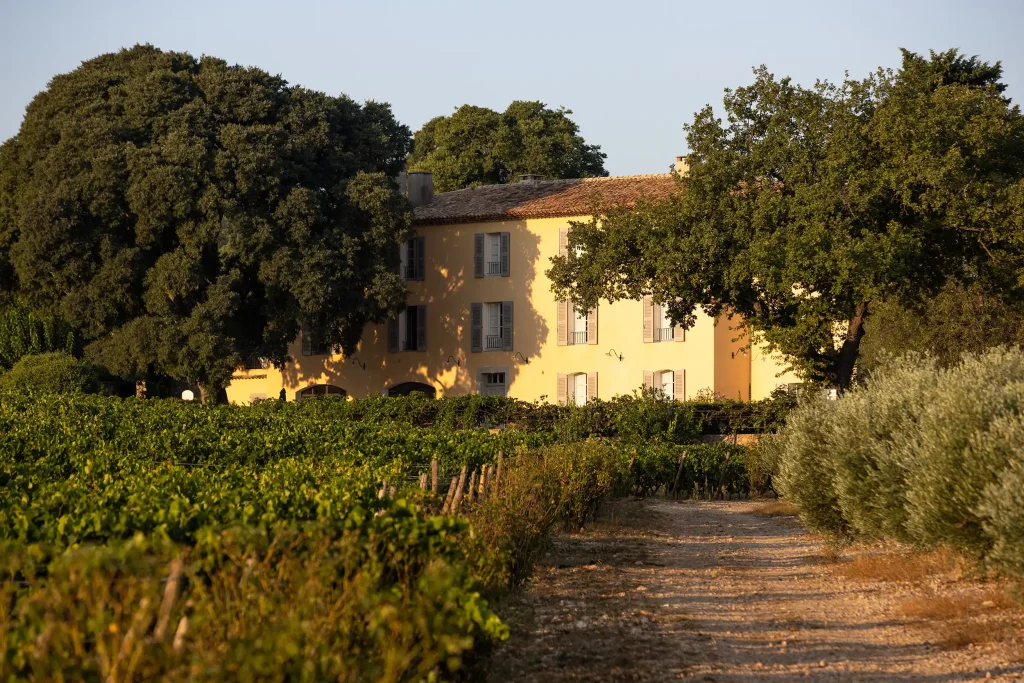
Chateau la mascaronne bastide vineyard

But rosé is certainly not restricted to France. In Italy it is rosato, in Spain and Portugal rosado. Lebanon does lovely things with the cinsault grape variety, while in Naoussa in northern Greece, the wonderfully named Apostoles Thymiopoulos makes a rosé from the region’s signature xinomavro grape that is so layered with rose petals and spice that I buy it every year and attempt to lay it down, to see how it will age… then end up drinking it all before I can find out.  

 Closer to home, the fertile soils of Kent produce pinot noirs that convert to beautiful, strawberry-ripe rosés, plusher and less subtle than their Burgundian cousins but delicious nonetheless: Gusbourne Estate make a fine example, packed with red berries. But I will end where I began, in southern France where, not long ago, I drove past a wild boar, cooling its hairy hide in the scented shade of thick pines, and up a hill to Château la Mascaronne, to try a 2023 rosé that combined cinsault, grenache, syrah and rolle (the grape the Italians call vermentino) and gave out ethereal perfumes of white peach and flowers that made the satisfying texture in my mouth a pleasant shock, and the lemon and saline aftertaste a delight. It went well with white fish, and also with the scented warmth that had nourished the grapes. It was a celebration of sunlight with a tawny tint and then, almost before I knew it, like the fleeting joys of summer, it was gone.  

2023 rosé that combined cinsault, grenache, syrah and rolle (the grape the Italians call vermentino) and gave out ethereal perfumes of white peach and flowers that made the satisfying texture in my mouth a pleasant shock, and the lemon and saline aftertaste a delight. It went well with white fish, and also with the scented warmth that had nourished the grapes. It was a celebration of sunlight with a tawny tint and then, almost before I knew it, like the fleeting joys of summer, it was gone.  

Babylonstoren Mourvèdre rosé 2026

A dangerously drinkable peach-coloured rosé from a vast, glorious estate, with hotel and restaurants, at the foot of Simonberg mountain in South Africa, this has notes of strawberry, basil and stone fruit.  


Simpsons Wine Estate Railway Hill Rosé 2023

Another fabulous Kent pinot rosé from an estate just outside Canterbury that is best knownlike most English wine estates, for its sparkling wines. This still wine, somewhere between apricot and carmineis juicy and refreshing, with flavours of tangerine, a burst of redcurrant and a raspberryleaf finish.  

Château des Sarrins Rosé Grand Cuvee 2025 

A combination of cinsault, grenache, syrah and mourvèdre made 40km from the coast by the Paillard family, best known for their Champagnes, this is a gold-tinted pink wine heady with yellow peaches and rose petals, garrigue herbs and delicate spice… this is what the region’s many insipid pale rosés aspire to be when they grow up.   

Château La Mascaronne rosé 2025

A Provençal rosé that’s pale, yes, but perfectly formed, with enough body and flavour to serve with the kind of salad and charcuterie lunch that the Mediterranean regions do so well.  


Gusbourne Rosé

One of England’s most successful wineries, less than 15 miles from the Kent coast, near a village, Appledore, with a name that indicates what great country this has always been for growing fruit. It’s just the variety that’s changed. 

Related

Privacy Overview

This website uses cookies so that we can provide you with the best user experience possible. Cookie information is stored in your browser and performs functions such as recognising you when you return to our website and helping our team to understand which sections of the website you find most interesting and useful.